
Two Braids

Good evening. Tonight I'm sharing a piece I originally wrote my senior year of university, in a small, application-based creative writing class taught by Ta-Nehisi Coates. Our assignment was simple: write about identity. It had to be personal and non-fiction — that was it.
This is what I wrote. Coates selected it to read and edit in front of the entire class, and looking back at it now, I can see why it still feels so like me — raw, unfiltered, exactly as I was. I hope you enjoy it.
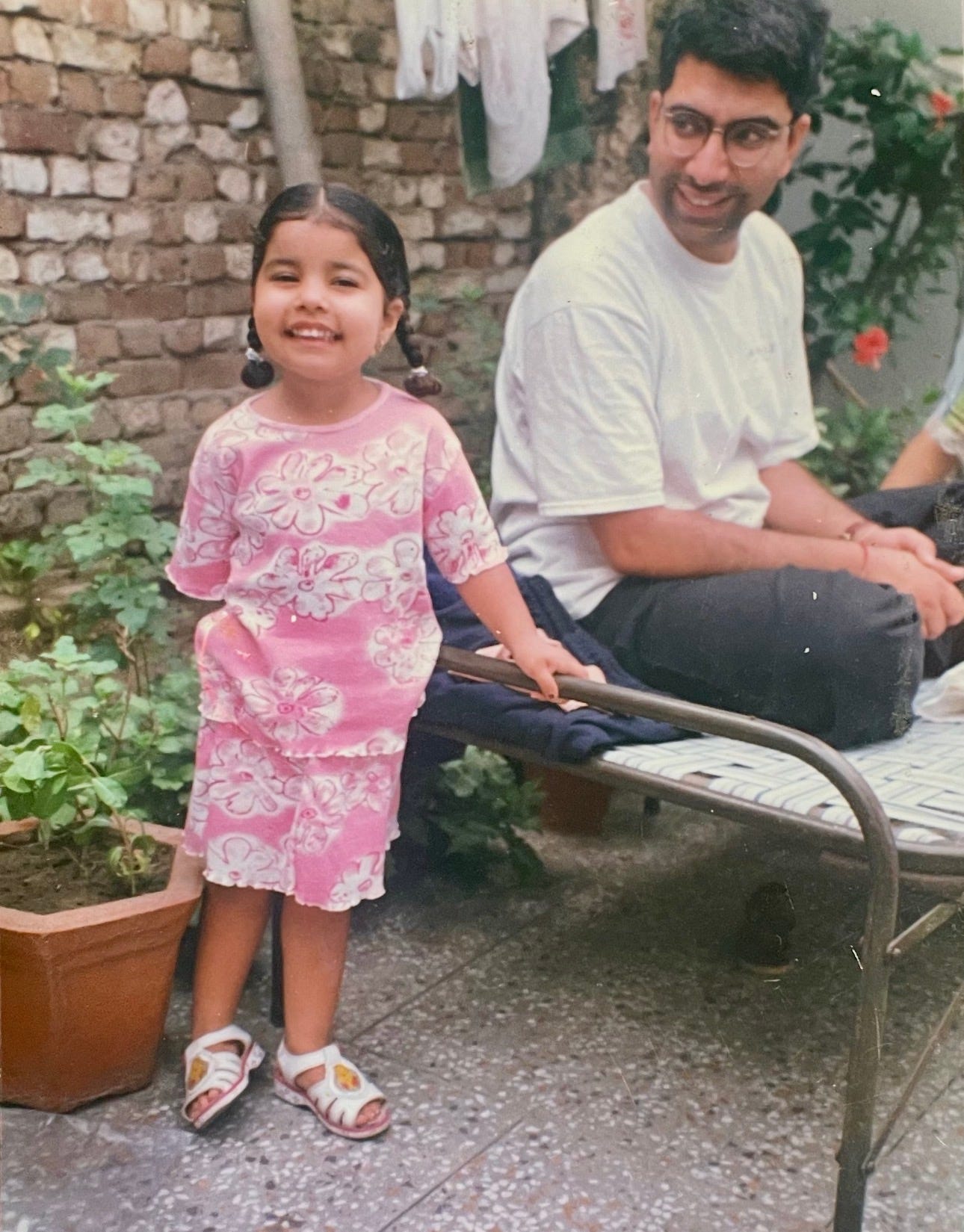
Every single school day from kindergarten to the sixth grade, I wore my hair in two tight braids. Every day, five days a week, 36 weeks of the year. Two braids and nothing else.
Each morning my mother would perform the practiced ritual: part my hair in the middle with her small gray comb, run coconut oil through the frizzy ends, weave my thick hair through her nimble fingers, and fasten the braids with colored bands.
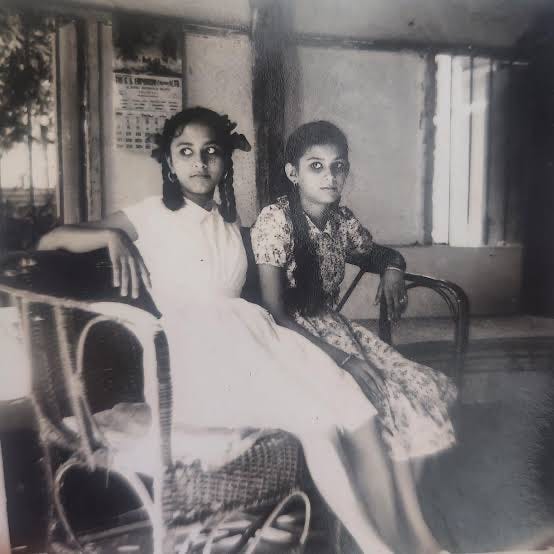
My mother immigrated from northern India, where her schooling was much stricter than most educational institutions in the states. In addition to a uniform, almost every Indian school girl was required to twin braid her hair as a sign of discipline. Open hair was inappropriate. Unbound, unkempt hair was a sign of moral or sexual promiscuity. Tightly braided hair represented restriction and discipline.
My mother wore her hair in two braids from the moment she started school to when she left for college. When she moved to this country and later had me, she didn't concern herself with conforming to American customs. My upbringing was modeled on her own childhood. She could care less how American mothers did their daughters' hair.
But I did. All the girls in my predominantly white, Catholic elementary school had beautiful, flowing hair. My best friend, Julianne, had straight hair that fell almost the entire length of her back. Kelsey would wear her curly hair open every day of school. Madison used to apply hairspray and fasten her hairstyles with clips. For seven years, my hair sat in braids.
For the first few years of school, I couldn't care less. My world view was limited to accepting whatever my parents told me as truth. If my mother said I had to wear my hair in braids, I believed it. But my curiosity got the best of me by the time I was eight years old. I was enamored by all the seemingly magical things my friends could do with their hair: tie it back, wear it loose, throw it in a ponytail. I started questioning my mom's choices, and inquired whether I could try wearing my hair open for once.
"No," my mother would say sternly, piercing me with a look that quelled any form of argument. I silently obeyed. That was that.
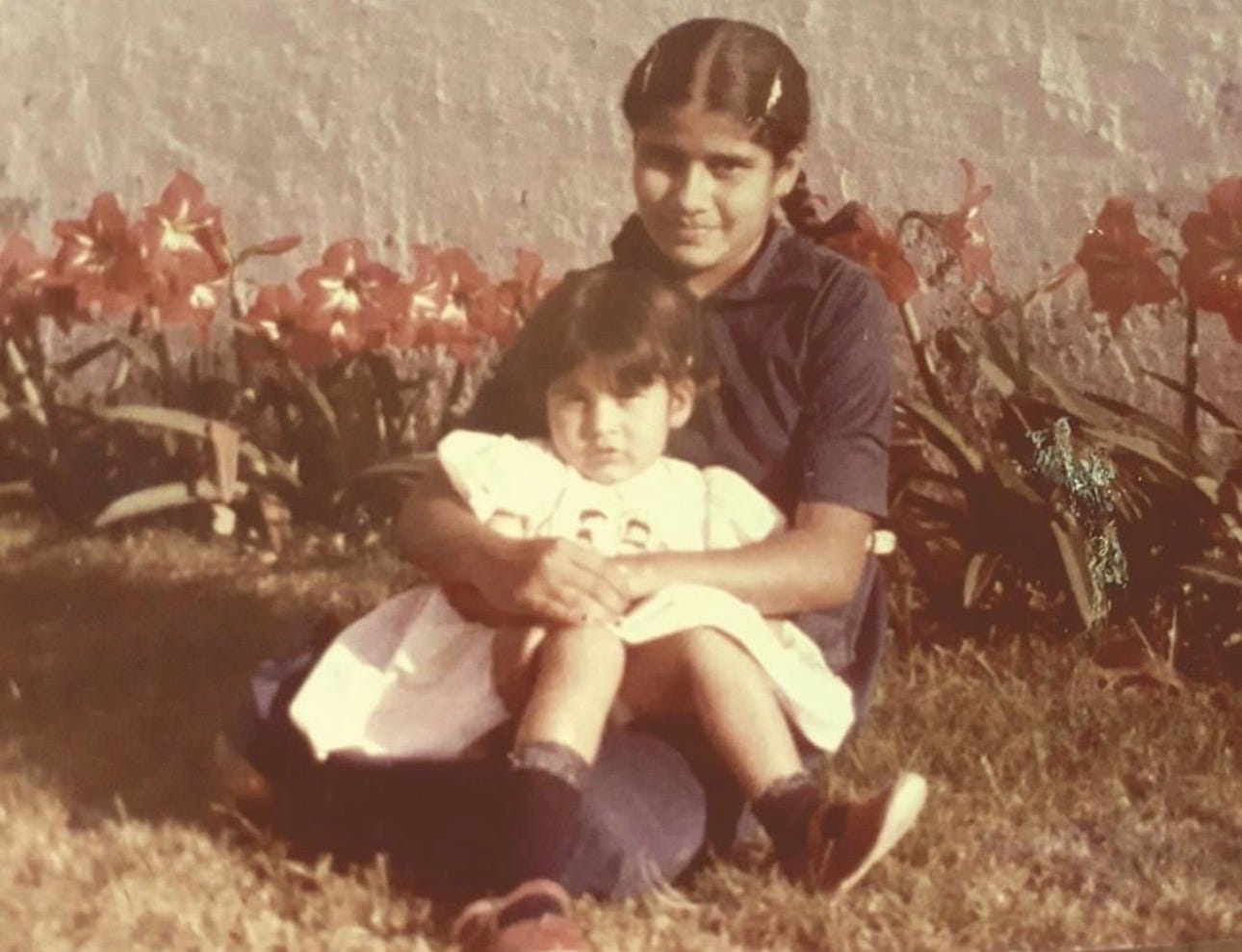
Every year in elementary school, my portrait on picture day was the same. Brown eyes, big cheeks, toothy smile, and my thick black hair sitting in braids on either side of my head. My mother's school pictures look exactly the same.
As the years went by, I became increasingly frustrated, unable to understand why I was held to a rule no one else seemed obligated to follow. Then, in sixth grade, a golden opportunity presented itself.
My elementary school announced that for the spring, our school would be putting on a production of Aladdin. They were looking for a sixth grade girl and boy to play the leading roles of Aladdin and Jasmine. This was my chance. My brown skin didn't deem me suitable to star in our other plays in years past, but I finally had an opportunity. I wasn't about to try out for the starring role with my hair in braids.
The morning of the audition, I mustered up the courage to ask my mother. I came down the stairs of our house into the kitchen. My mother sat waiting by the table with the comb in her hand, as she had hundreds of times before. Instead of sliding onto the stool next to her as I always did, I stood nervously and looked my mother in the eyes.
"Mom, I'm trying out for the school play today." I slowly unfolded a piece of paper that was sitting in my pocket and handed it to my mother, a printed picture of princess Jasmine. "See, Jasmine's hair is black, and it's open. I need to keep my hair open to make sure I look like her and get the part."
My mother's brows furrowed and I stayed silent, anticipating her rejection. But then, there came a softness to her face, a look of acceptance. She shrugged her shoulders. "Okay."
To this day, I'm unsure what prompted her change of heart. Maybe she was just feeling nice that day. Maybe, for the first time, she saw an opportunity for her daughter to stand equally with the other American girls. Or perhaps she was simply as exhausted as I was with the mundanity of braiding my hair day after day, year after year.
I sat down next to my mother as she did something she never had before. She took the comb, parting my hair in the middle and running coconut oil through the frizzy ends. But instead of binding my hair, she allowed it to hang free, letting wisps of my hair fall loosely around my face. I smiled as I pushed strands of my hair behind my ear and stared at my new self in the mirror.
I strutted to school that morning, my confidence increasing as my velcro Skecher sneakers stepped across the playground pavement. I smiled as I felt strands of my hair brushing against my arms and shoulders — a sensation so trivial it has almost no meaning. But it was the first time I had experienced it, and I felt special. I was finally in on the elusive secret that all pretty girls with long hair seemed to share.
I walked into the classroom with an entrance akin to a rockstar going out on stage, about to command the crowd. My fellow classmates filed in, making their way to their seats. The teacher was writing on the board, preparing the lesson plan. For them, it was a normal day.
Most people didn't notice a change, but it didn't matter to me. I sat elated in my chair, beaming. My hair was undone and my spirit uplifted. Finally, I wasn't bound.
Looking back now, I understand that my mother wasn't withholding something from me — she was passing something down. Her braids were never really about hair. They were about the world she came from, the rules that had shaped her, the identity she carried across an ocean and into a country that didn't ask about any of that. And for a long time, I wore that world on my head without knowing it.
What I wanted, at eight years old, was simply to belong — to feel the same breeze my classmates felt, to share in the small, unspoken rituals of girlhood that everyone around me seemed to take for granted. What I didn't yet understand was that I already belonged to something. It just looked different. It smelled like coconut oil. It showed up in the same photograph, year after year, brown eyes and thick black braids — my mother's childhood and mine, braided together whether I chose it or not.
The morning my hair finally fell loose around my shoulders, I thought I had won something. Maybe I had. But I've come to think I was also just beginning to understand the full weight of what had always been holding it.
Thank you for reading. I appreciate the time you’ve taken to read this, and the time you are giving to support independent writers. If this piece moved you or made you think, I’d love to hear your thoughts in the comments or directly at anbhanot@gmail.com. Dialogue is what makes this community so valuable. I hope to see you again.
Very nicely put in words . I really admire your creative expression .Keep it up.
I will never forget reading this piece in class 💚